
Paint correction is superior to standard polishing because it involves a multi-stage mechanical leveling process that permanently removes surface defects like scratches, swirl marks, and oxidation. While polishing merely enhances gloss temporarily using fillers, paint correction restores the clear coat’s structural integrity, providing the essential foundation for long-term ceramic protection and a mirror-like finish.
Defining the Restoration Process: Technical Specifications
To understand why a vehicle might require more than a simple buffing, one must look at the science of surface clear coats. When we consult with enthusiasts regarding paint correction in Lumberton, NC, we focus on the actual state of the paint rather than just the immediate surface shine.
- Mechanical Leveling: The process of using abrasive compounds to shave microns of the clear coat down to the depth of the deepest scratch, creating a perfectly flat surface.
- Abrasive Grade: Refers to the “grit” of the liquid compound; heavy-cut compounds remove deep defects, while ultra-fine finishing polishes create high-mirror clarity.
- Heat Management: The technique of controlling the temperature of the paint during machine use to prevent “burning” or softening the clear coat.
- Defect Depth Analysis: A diagnostic step using high-intensity lighting and paint depth gauges to determine how much clear coat remains before beginning the leveling process.
Correction vs. Polishing: A Structural Comparison
Choosing between these two services depends on whether you are seeking a temporary shine or a permanent restoration of your vehicle’s value. Many car owners in Pembroke notice that after a cheap “polish,” their car looks great for a week, only for the swirls to reappear after the first rain. This is because standard polishing often relies on “fillers”, oils that hide scratches rather than fixing them.
Comparison: Standard Polishing vs. Multi-Stage Paint Correction
| Feature | Standard Polishing | Paint Correction |
| Primary Goal | Temporary gloss enhancement | Permanent defect removal |
| Defect Removal | Hides minor swirls with fillers | Levels the clear coat to remove scratches |
| Visual Result | Improved shine | Reveal the True Depth and Brilliance |
| Durability | Wears off after a few washes | Permanent (unless new damage occurs) |
| Foundation | Not suitable for ceramic coating | The Essential Foundation for Protection |
How-To: Identify and Audit Your Paint’s Condition at Home
Determining whether your vehicle requires a simple gloss enhancement or a full restoration is the first step in maintaining its long-term value. Follow these expert steps to perform a self-audit on your car’s exterior:
- The High-Intensity Sunlight Test: On a clear day, look at the reflection of the sun on your car’s hood. If you see a “halo” of fine circular scratches radiating from the center, your clear coat is physically damaged. These are the defects that require surgical accuracy to remove permanently.
- The LED Flashlight Audit: If it is cloudy, use a high-output LED flashlight. Hold the light about 12 inches from the panel; if the reflection looks “blurry” or “cloudy” rather than sharp, your paint is suffering from oxidation.
- The “Fingernail Test” for Depth: Gently run your fingernail across any visible scratch. If your nail “catches” or drops into the groove, the scratch may require touch-up work. If it feels smooth but looks white, we can typically eliminate swirls, scratches, and oxidation permanently.
- The Cleanliness Check: Wash and dry a small section of the car. If the paint still feels “gritty” even when clean, it has bonded contaminants. This surface must be mechanically leveled to reveal the true depth and brilliance of your factory paint.
- Identify “Buffer Haze”: Look for holographic or rainbow-like trails in the paint. This is often the result of improper high-speed polishing from a previous detail. These holograms are a prime indicator that you need professional Lumberton, NC paint correction to fix the damage left by others.
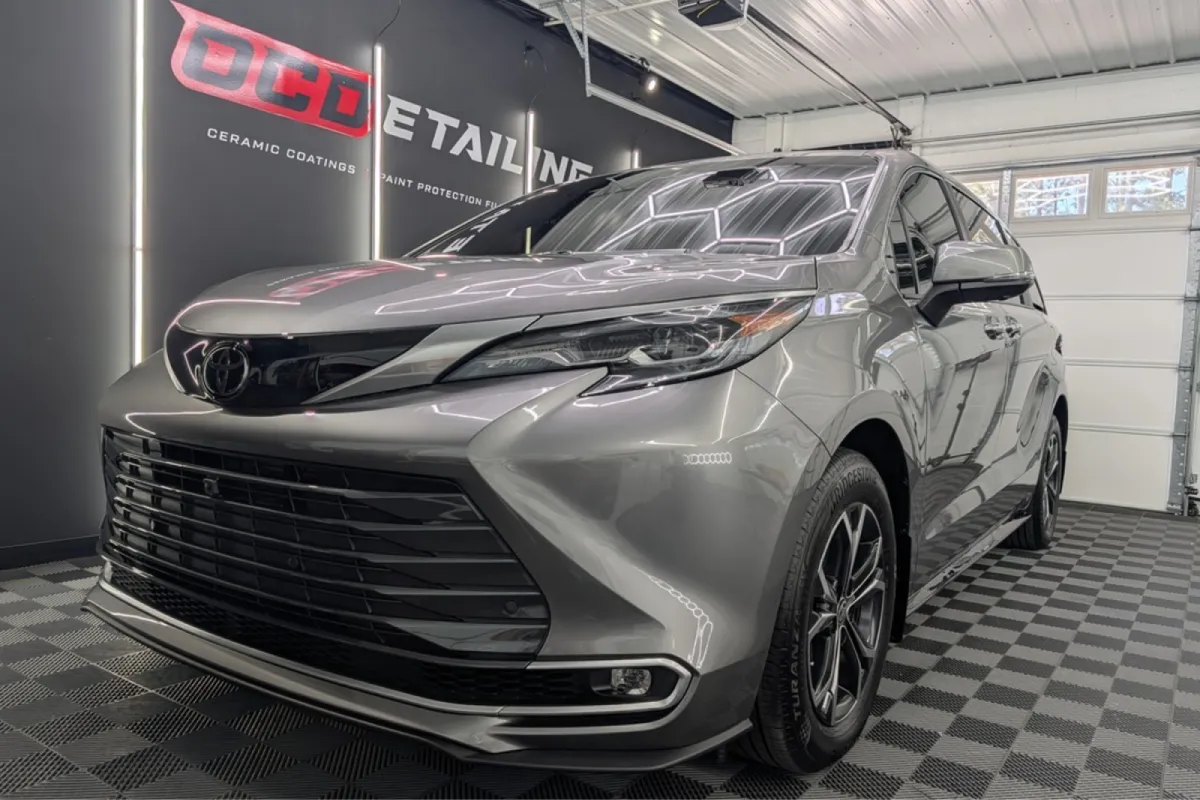
Professional Authority in Every Detail: The Systems-Based Care Protocol
At OCDetailing NC, we solve the problem of dull, damaged paint by restoring flawless clarity with healthcare-grade precision. Our shop utilizes our proprietary systems-based care, rooted in healthcare precision for a methodology built on trust, consistency, and results that speak for themselves. We believe that every vehicle deserves the same level of discipline, cleanliness, and systematic verification found in a medical facility.
By applying our proprietary protocol, we deliver:
- Surgical Accuracy to Maximize Clear Coat Integrity: We remove the absolute minimum amount of material necessary to achieve a perfect finish.
- Eliminate Swirls, Scratches, and Oxidation Permanently: We do not use “fillers” or waxes to hide damage; we fix the surface at a molecular level.
- Systems-Based Defect Removal for Permanent Results: Our multi-step process ensures a haze-free finish that remains clear for years.
- Absolute Peace of Mind: Backed by 20+ years of experience, our uncompromising craftsmanship is designed for those who demand the best.
During a recent project for a client in Whiteville, we demonstrated how this systems-based approach identified sub-surface defects that a standard detailer would have completely missed. We maintain an education-first approach with zero sales pressure, ensuring you understand the “why” behind every stage of the process. For us, quality goes beyond first gloss; it is built to perform long-term. No compromise. Ever.
Debunking the Myth: “Paint Correction Thins Your Clear Coat Too Much”
A common industry misconception, one we frequently address with drivers in Back Swamp, is that paint correction is dangerous because it “strips” away the protective layer of your car. In reality, modern surgical accuracy and high-precision paint depth gauges allow professionals to remove only a fraction of a human hair’s width of material.
When performed correctly, Lumberton paint correction actually preserves the vehicle by removing oxidized layers that would otherwise lead to premature clear coat failure. Every detail is strictly inspected to ensure that we stay well within safe limits, maintaining the structural health of your factory paint while providing a visually stunning result.
The Essential Foundation for Long-Term Ceramic Protection
One of the most critical reasons to choose correction over polishing is the application of protective layers. If you apply a ceramic coating over uncorrected paint, you are essentially “locking in” the scratches and swirls under a semi-permanent glass layer.
By choosing to reveal the true depth and brilliance of your factory paint first, you ensure that the coating bonds to a perfectly clean, smooth surface. This maximizes the coating’s longevity and creates a “depth” of shine that looks like the car is constantly wet. It is the difference between a high-end restoration and a simple car wash. For those seeking the best paint correction in Lumberton has to offer, this foundational work is what separates a standard detail from an expert-level transformation.
Conclusion: Investing in Your Vehicle’s Future
Paint correction is the only way to truly reveal the depth and brilliance of your factory paint. It is a sophisticated transformation that provides absolute peace of mind and serves as the only logical step before applying long-term protection like Ceramic Pro or Paint Protection Film.
As a reliable partner in your vehicle’s longevity, OCDetailing NC is committed to exceeding your expectations through precision and excellence. We invite you to experience a transparent, premium experience where your vehicle is treated as a high-value investment rather than just another job.
Ready to see your car’s true potential? Contact us to request a free quote and book your appointment with OCDetailing NC today. Let our experts protect your investment with unmatched craftsmanship!
Frequently Asked Questions
Is paint correction a one-time service?
Yes, if the vehicle is maintained correctly afterward. Because we eliminate swirls, scratches, and oxidation permanently, the defects will not return unless the car is subjected to improper washing techniques or abrasive contact.
How do I know if I need correction or just a wash?
If your paint looks “cloudy” or shows “spider webs” when viewed under direct sunlight or a flashlight, you have surface defects that require correction. A standard wash cannot remove these physical scratches.
Can paint correction fix deep scratches?
If a scratch has passed through the clear coat and into the primer or metal (the “fingernail test”), it cannot be corrected with a machine and may require touch-up paint. However, we can often round the edges of deep scratches to make them significantly less visible.