
High heat and direct sunlight ruin the ceramic coating application process by causing the carrier solvents to flash off instantly. This ultra-fast evaporation accelerates the curing reaction before the active liquid polymers can level and bond evenly with the clear coat. The result is permanent visual flaws known as “high spots,” streaks, and a compromised protective barrier that fails to adhere long-term.
Technical Specifications and Key Features of Ceramic Coating Chemical Architecture
To appreciate why climate control is non-negotiable during installation, it helps to understand the underlying chemistry of a premium liquid nano-coating. These products are highly engineered chemical solutions designed to interact at a molecular level with your vehicle’s factory paint. Professional technicians analyze and preserve these systems by understanding their specific architectural specifications:
- Active Crystalline Nano-Polymers: The core active particles are responsible for creating the ultra-hard, hydrophobic matrix across the vehicle’s paintwork, delivering superior scratch resistance and water sheeting.
- Carrier Solvents: Specialized, volatile organic compounds (VOCs) engineered to keep the active nano-polymers perfectly suspended in liquid form, facilitating an even spread and smooth surface leveling during application.
- Flashing Window: The chemically calibrated timeframe between laying down the liquid coating and wiping it away. This window represents the moment when solvents safely evaporate, signaling that the coating is ready to be leveled and buffed.
- Cross-Linking: The molecular-level chemical reaction where nano-polymers cure, expand, and fuse directly into the microscopic pores of the automotive clear coat, establishing a permanent structural bond.
The Four-Stage Failure Sequence Induced by Thermal and Solar Exposure
When liquid nano-coatings are applied to an automotive surface subjected to excessive ambient heat or direct ultraviolet radiation, the chemical installation process breaks down rapidly. This structural failure sequence occurs in four distinct steps, transforming a premium protection product into an unsightly visual headache.
- Accelerated Solvent Volatilization: The Instant Solvent Flash Phase.
The liquid ceramic formula hits a hot, solar-baked body panel, causing the volatile carrier solvents to boil off instantly rather than evaporate at a slow, controlled pace.
- Loss of Fluid Suspension: Premature Polymeric Hardening Phase.
Deprived of its liquid suspension medium, the raw matrix hardens prematurely into localized clumps on top of the clear coat before the technician can level or distribute the product evenly.
- Visual Defect Formation: High-Spot Crystallization Phase.
The unlevelled coating dries into dense, dark patches, permanent streaks, or a cloudy, rainbow-like film that cannot be buffed away with a standard cloth, indicating a structural high spot.
- Bond Failure and Peeling: The Molecular Delamination Phase.
Because the coating hardened on the surface instead of anchoring deep inside the paint’s open pores, the compromised barrier suffers poor molecular cross-linking, causing it to peel away during regular washing.
Environmental Application Matrix: Controlled Studio vs. Direct Sunlight & Heat
The physical environment in which a nano-coating is installed dictates the long-term performance and durability of the finish. The matrix below contrasts a controlled, professional studio environment with volatile, unprotected outdoor conditions.
| Environmental Factor | Controlled Cleanroom Studio | Direct Sunlight & High Heat |
| Panel Surface Temperature | Constant 18°C to 22°C; perfect for maintaining stable chemical suspension | Exceeds 45°C to 60°C; forces immediate boiling of volatile carrier liquids |
| Average Flashing Duration | 2 to 5 minutes; predictable window allows for precise, stress-free leveling | 5 to 15 seconds; unpredictable, ultra-fast flash prevents manual leveling |
| Wipe-Off Workability | High: microfiber towels glide smoothly to remove excess, unbonded material | Poor; towels catch and drag on tacky resin, leaving deep micro-streaks |
| Crystalline Bonding Efficiency | Maximum: polymers cross-link deeply inside paint pores for multi-year durability | The weak, surface-hardened resin layer easily sheers off under environmental stress |
Debunking the Myth: “Direct Sunlight Cures the Coating Faster, Making the Protective Layer Harder”
A common and highly disruptive myth in the automotive care community is that baking a freshly applied ceramic coating out in the open sun forces it to cure faster and lock into a harder shield. Many DIY detailers and mobile operators believe that if solar energy is good for drying traditional waxes, it must accelerate the performance of a high-tech coating.
In reality, raw ultraviolet radiation and intense solar heat are destructive to a coating during its critical initial curing stage. While professional studios use controlled infrared (IR) curing lamps to gently heat the metal panels from behind, stimulating uniform cross-linking, direct sunlight heats only the topmost layer of the uncured fluid. This uneven thermal stress breaks down the delicate polymer chains before they can establish an anchor inside the clear coat. Instead of a harder shield, solar baking results in a brittle, microscopically fractured layer that cloudily degrades within months rather than protecting your car for years.
Applying Our Advanced Surface Protection Systems to Solve This
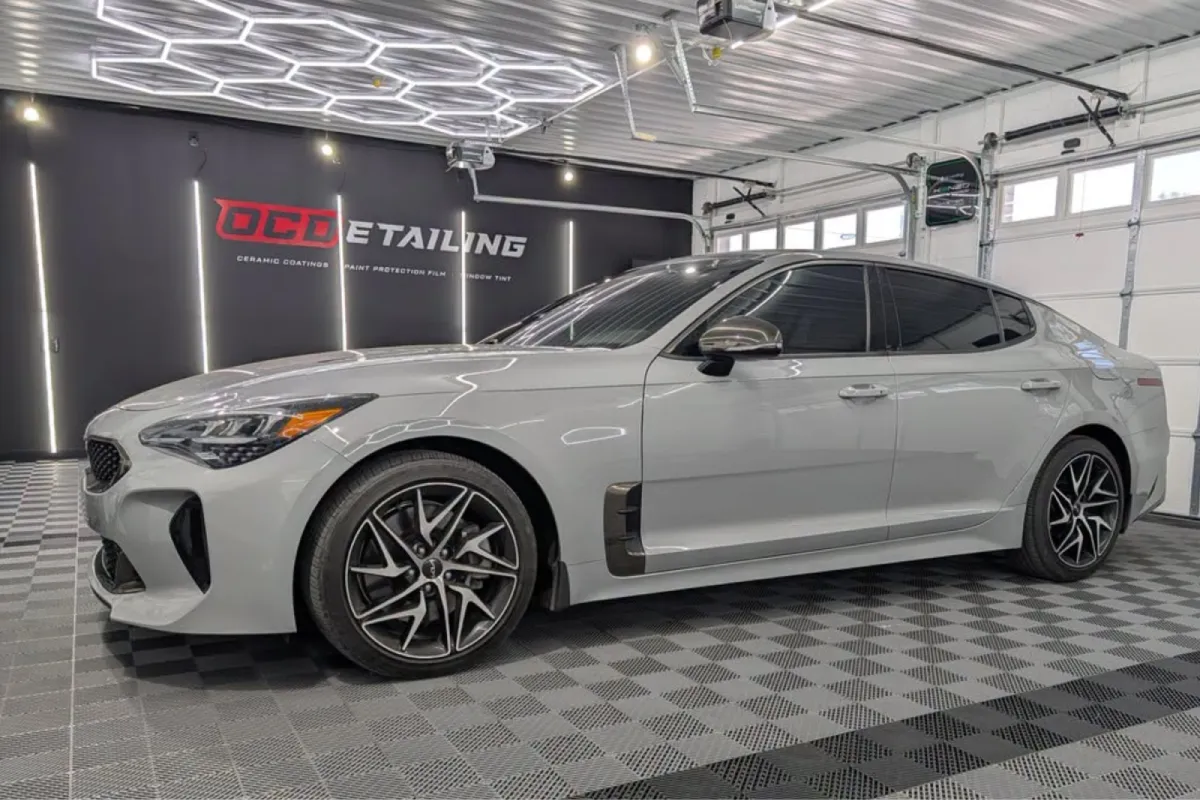
At OCDetailing NC, we believe exceptional ceramic coating results come from precision, education, and uncompromising standards. Our systems-based care, rooted in healthcare precision, ensures every stage of the process is performed in a controlled environment, where every detail is strictly inspected and quality goes beyond a first glance. With an education-first approach with zero sales pressure, we help you make informed decisions while delivering professional authority in every detail from consultation through completion.
Backed by 20+ years of experience, our team provides uncompromising craftsmanship for those who demand the best, using meticulous preparation and climate-controlled application techniques that are built to perform long term with no compromise. ever. The result is UV ray protection, chemical resistance, improved gloss and shine, and ease of cleaning, giving your vehicle lasting durability, a flawless finish, and absolute peace of mind that your investment is protected for years to come.
Regional Environmental Factors and Local Paint Preservation Realities
Southeastern North Carolina’s climate creates unique challenges for maintaining a flawless vehicle finish. High humidity, intense summer heat, airborne pollen, and agricultural dust can interfere with ceramic coating applications, preventing the coating from curing properly and reducing its long-term durability. Installing a coating in a controlled indoor environment is essential for achieving a smooth, even bond that delivers lasting protection.
Choosing ceramic coating in Lumberton means your vehicle is professionally decontaminated, machine-polished, and coated under carefully controlled conditions. At OCDetailing NC, every panel is thoroughly inspected before application to ensure the surface is properly prepared for maximum gloss, durability, and long-term performance.
Professional ceramic coating in Lumberton, NC helps defend your paint against UV rays, bird droppings, acid rain, road grime, and other environmental contaminants common throughout the region. Proper application also improves water beading and makes routine washing significantly easier, helping your vehicle stay cleaner for longer.
When you invest in Lumberton ceramic coating, you’re choosing a solution designed to withstand the local climate while preserving your vehicle’s appearance and value. With expert preparation and precise installation, you can enjoy a deep, reflective finish and reliable protection that lasts for years.
Trust Your Investment with Professional Authority
Allowing extreme ambient heat, direct solar radiation, or outdoor dust to interfere with your ceramic application causes premature failure, messy streak patterns, and permanent paint cloudiness. At OCDetailing NC, we apply ceramic coatings in a carefully controlled environment, following proven installation procedures that deliver a deep, glass-like finish, outstanding hydrophobic performance, and long-lasting protection for your vehicle.
Ensure your vehicle receives unmatched quality and long-term protection under one roof. Contact us to request a completely free quote and book an elite preservation appointment today. Whether your vehicle requires high-end ceramic nano-coatings, premium window tinting, detailing, or advanced paint protection film, reach out to our team to secure craftsmanship executed with total precision.
People Also Ask
How can you identify and safely fix a ceramic coating high spot after it hardens?
A high spot appears as a dark, irregular streak, a cloudy patch, or an oily, rainbow-colored reflection on the vehicle’s paintwork. If discovered within the first 30 to 60 minutes after application, it can often be leveled by applying a small amount of fresh liquid coating directly over the spot to re-emulsify the active solvents and buffing it clear; however, if the coating has fully hardened overnight, the area must be carefully machine-polished down to the raw clear coat and completely re-applied.
Does humidity affect the flashing window and curing time of liquid nano-coatings?
Yes, relative humidity significantly alters the behavior of a ceramic coating. High humidity introduces excess moisture molecules into the air, which act as an environmental catalyst that dramatically accelerates the flashing and crystallization process, while ultra-dry conditions can slow down the cure window, requiring precise adjustment of towel techniques by the detailer.
Can you apply a ceramic coating outside if the vehicle is parked completely in the shade?
Applying a ceramic coating outside in the shade is highly discouraged by professional chemists and master detailers. Even without direct sunlight hitting the panels, high ambient air temperatures will still cause the carrier solvents to flash prematurely, and open-air winds will blow microscopic dust, dirt, and insects directly onto the tacky, uncured surface, permanently trapping contamination within the crystal matrix.